
Signs of a Time Shift

The future has a habit of arriving faster than some people find easy to handle.
At World of Water (WOW), much of our work begins with that simple observation. Not because the future is some awakening blue dragon, but because speed (unconsidered speed) has consequences. This post is written for anyone seeking the wellness of the future itself, and it comes from a long-held belief in well-thought-through, holistic progress: progress that flows in a way that can be felt.
The flow we work with at the HoBB Field Centre is very simple.
It has three quiet stages: then, now, and when.
This is not the timeline of “I want it now, at any cost.” It is a felt timeline – one in which actions in the present arrive, eventually, as conditions in the future. And philosophy creeps into this whether we invite it or not.
If there is a tangible outcome from reading this post, it is this:
balance has to be designed for, especially in how raw materials, ideas, and energies are used – often with little or no regard for when the future actually arrives.
(Image)
A small example of this (image above) turned up on the HoBB’s vegetable plot recently: This ‘dead’ party balloon, once filled with helium – popped. Its gas then escaped the Earth’s atmosphere … forever. A finite planetary resource disappears in a moment of fun. Out of balance. A tiny act, now multiplied millions of times around the World.
That same pattern of ‘care versus carelessness’, runs through publishing, technology, food, water, and now ….. artificial intelligence.
Then: a publishing story about price, value, and care
Timelines are often thought of as belonging to the past: backstories, archives, history. But the past is not inert. It was once a set of choices made in a living “now”.
One family story from publishing helps explain why this matters.
In 1899, the UK Publishers Association and UK and Irish booksellers agreed the Net Book Agreement. Books would be sold to the public at prices set by publishers. Whatever one thinks of it today, it was an attempt to protect balance between authors, publishers, booksellers, and readers.
In March 1997, the Restrictive Practices Court ruled that the agreement was against the public interest and therefore illegal. A structure that had shaped publishing for almost a century began to decay.
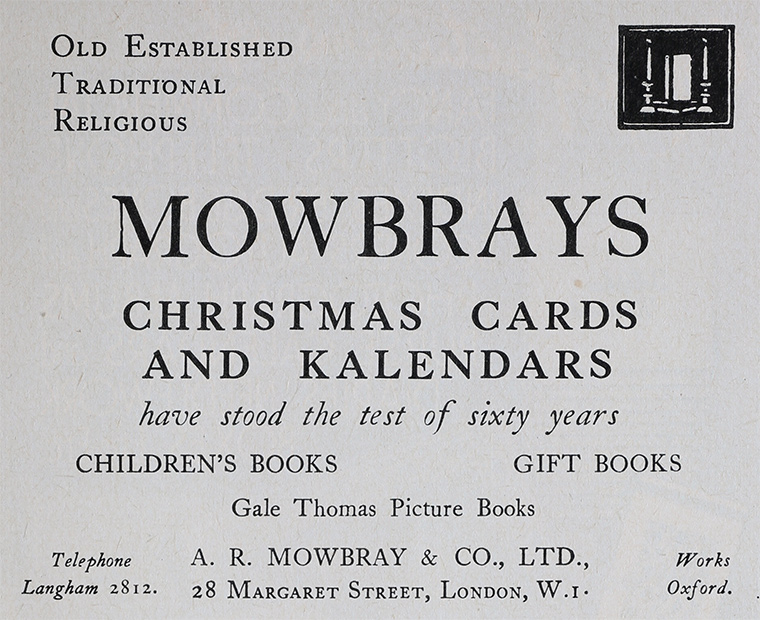
Around that time, Eva took down her Newman Mowbray Books shop sign in Oxford. It was a small human action, but it mirrored much larger signals flashing across the publishing world.
Signs move when the ground beneath them changes.
That sign did not vanish. It now hangs at the HoBB Field Centre, alongside another sign: “Grant’s Plants” – both markers of changing systems. Together, they quietly signal a shift from fixed prices to fluid markets; from books to food to entire planetary systems.
Now: stories, children, and new tools
Our work with early readers had already begun before these market shifts fully surfaced.
In 2007, we were asked by the English Literacy Foundation to help with a series of 35 early-reader print-on-demand titles, published in Wales by Cyhoeddwyr y Superscript. A year later came illustration work for Village Folk Books, introducing young readers to characters such as:
-
Clarissa the Clown
-
Majesty the Magician
-
Roberto the Robot
-
Arthur the Artist
A cast that already hinted at invention, imagination, and the meeting of craft and curiosity.
In 2013, The History of Newman Mowbray Bookstore – along with an archive of Picture Post editions – was donated to the World of Water library. At that point, boundless stories formally joined WOW’s environmental mission.
Fast forward to Spring 2023. Little People Books commissioned a report exploring how AI might influence published titles for pre-school children. Within that research, the first clear signs of spatial computing began to surface.
On 25 May 2024, a test project was launched. Story passages were used as prompts for image generation; early ebook experiments followed that could sing, jump, run, and hide. The report for WOW’s trustees was published later that year.
The results were encouraging, but they raised the right questions. AI, like any powerful tool, can either amplify thoughtful storytelling or flood developing minds with noise.
Whose Book Is It Anyway?
Offline, LPB is now researching how spatial computing can enhance live storytelling with focus groups and audiences, including projects such as “Whose Book Is It Anyway?” – where stories are shared, shaped, and responded to in real time.
In the words of children’s book author Rebecca Davies:
“Keep it full of new pirates and dragons, new dinosaurs and time machines, new aliens and regular kids in extraordinary situations.”
AI is simply the latest tool in a very old human effort: making those extraordinary situations vivid, meaningful, and humane.
When: designing balance into the future
Across helium balloons, book markets, AI systems, water cycles, and food production, the same pattern repeats. When we rush for “gold”, (whether it’s material, social, or personal), without care, imbalance follows.
That imbalance shows up as stress in human health and as strain within the planet’s biomass, atmosphere, and water systems.
There is no great secret to getting the future “right”. Most people already know, intuitively, what feels balanced and what does not. The harder work is designing systems that reward care rather than speed alone.
Somewhere in the “when”, we imagine a world in which the large language model, ChatGPT, accepts a Nobel Prize for the Future – not for being fast or powerful, but for helping progress remain planetary-centred and human-scaled.
A small wake-up call
This post sits among others online that gently lean towards lasting planetary and family health through thoughtful action.
If it does anything at all, I hope it nudges you to pause – right here, in this exact now – and notice your own sense of balance. The next time you celebrate, purchase, publish, teach, or tell a story, you might ask these quiet questions:
- What does this do to my future?
- To our shared water?
- To the materials that leave us and never return?
You already know more than you think.
The future is listening.

Image Gallery:
Early results from Little People Books story passages used for ai prompt-to-image (midjourney) including LPB’s first ebook test using ai prompts.


Actions: As AI results were good, our tale spinners at LPB are now working to integrate AI into online experiences.


Discover more from The HoBB
Subscribe to get the latest posts sent to your email.